

CABLE CAM SYSTEMS FAQ
Buying a Four-Point Cable Camera for a Permanent TV Studio
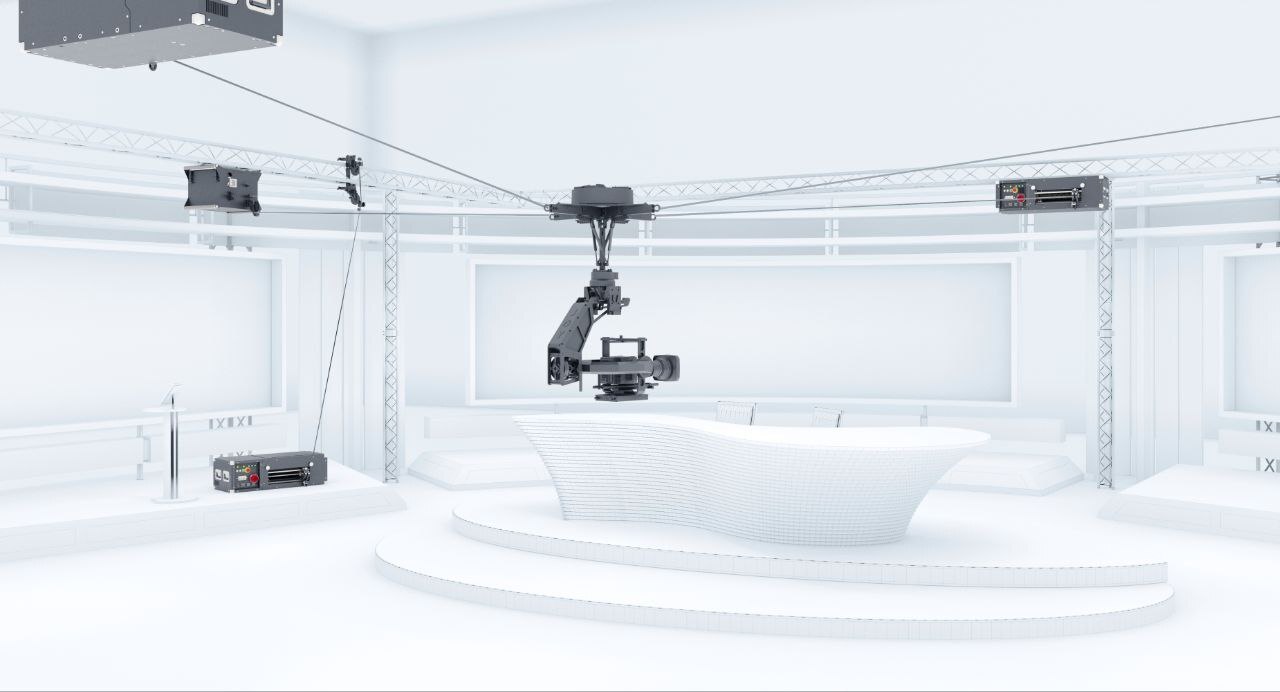
The JM 1.3 Studio by JoyMechanix is a four-point 3D cable camera system for TV studios and other compact production venues. It is available for purchase, with training for the owner's technical and operating team. Broadcasters planning a permanent installation should evaluate it when productions need camera travel across a three-dimensional studio volume, with repeatable moves and a defined operating area.
When should a studio shortlist a four-point system?
A four-point cable camera makes sense when the shot list requires the camera to travel between different parts of the set and change height along the way. This can include moving from a wide view of the studio toward a presenter or crossing between presentation areas during a programme.
First, mark those paths on the studio plan. If every required shot follows one fixed line, a rail camera may be sufficient. For overhead movement within one defined area, an inverted jib may be a better fit. Compare the actual shots before choosing the mechanism; the JoyMechanix system selection guide covers these alternatives.
First, mark those paths on the studio plan. If every required shot follows one fixed line, a rail camera may be sufficient. For overhead movement within one defined area, an inverted jib may be a better fit. Compare the actual shots before choosing the mechanism; the JoyMechanix system selection guide covers these alternatives.
What space can the camera actually use?
The room's floor dimensions do not describe its usable flying volume. Mounting height, cable geometry, the camera package and obstructions determine which positions are available.
A wide room with a low ceiling needs particular attention: cable sag can restrict achievable camera height. Lights, scenery, screens and access routes also affect the proposed layout. Ask for a review of the intended shots within the real studio geometry, including any alternative set layouts. A catalogue maximum diagonal alone cannot confirm that a particular move will work.
Provide a floor plan, ceiling heights, available structural information and photographs. Structural suitability and installation requirements need project-specific engineering review before the configuration is approved.
Specify the complete camera package
List the camera body, lens, stabilized head and accessories together. Their combined weight and physical dimensions affect the configuration. Confirm how operators will control the camera, head and lens, and how power, video and other production signals will reach the control room.
Do not treat an existing camera or head as compatible by default. Ask JoyMechanix to confirm the proposed combination and identify any additional hardware. For daily studio work, also agree how the crew will access the equipment for inspection and maintenance between productions.
Include motion control and AR in the brief
If recurring programmes need repeatable shots, describe the moves and how the operator should recall and adjust them. JoyMechanix offers motion control, recorded paths and programmable safety zones; the required functions should appear in the agreed configuration.
AR tracking is a separate requirement to specify. If graphics must stay aligned with the camera image, identify the graphics platform, camera, lens and head early. Ask which tracking data the proposed system provides and what calibration and integration work is required. An available data protocol is not, by itself, confirmation that the complete graphics workflow has been tested.
Can the studio's own team operate the system?
Yes. JoyMechanix's training programme prepares the buyer's team through online instruction, software emulation and supervised installation training. The client provides the installation crew; roles and training scope should be agreed before delivery.
For a comparable purchase quotation, request:
- The system configuration, included equipment and optional items.
- Responsibility for studio preparation, installation and commissioning.
- Operator and technician training, documentation and handover.
- Maintenance requirements, spare parts, support and warranty terms.
- Acceptance checks covering the agreed shots and production signals.
Send JoyMechanix the studio plan, shot list, camera package, AR requirements and intended installation date. These details turn a request for a cable camera into a defined permanent installation proposal.