

CABLE CAM SYSTEMS FAQ
JoyMechanix Black Swan gimbal vs third-party gimbals: what you gain with native integration
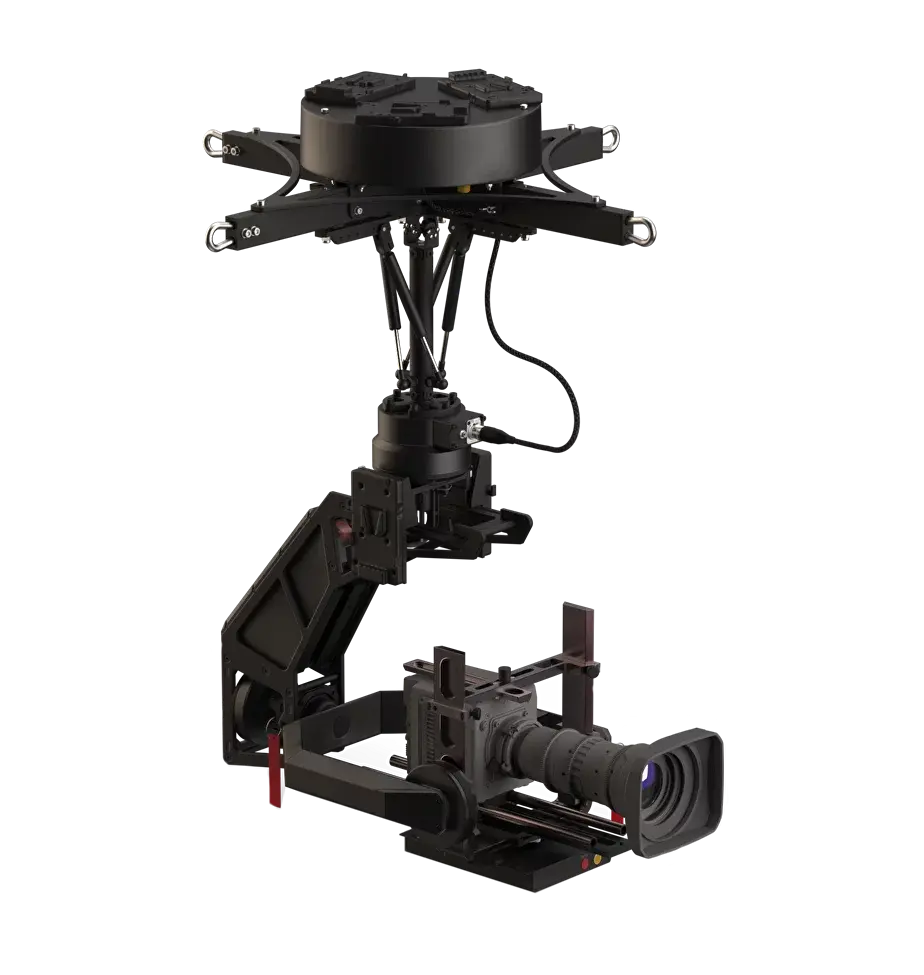
All gimbal paths can work - your existing gimbal, a third-party option, or JoyMechanix Black Swan. The difference is how much of the workflow is natively integrated: signal, lens control, AR data, and synchronized motion control are simplest and most capable with the JoyMechanix gimbal.
Article Scope
This article explains the practical trade-offs when choosing a gimbal for JoyMechanix cable cam and crane systems: integration effort, video and control transport over fiber, AR tracking outputs, and whether motion control can be synchronized and programmable. It does not replace a camera-and-lens compatibility check, payload and balance review, or a final integration plan for specific third-party gimbals and AR toolchains.
JoyMechanix’s BlackSwan gimbal vs third-party options
When choosing a cable cam system, one of the key questions is which gimbal to use. In most cases, there are three options: using a gimbal you already own, buying a third-party gimbal, or going with a JoyMechanix gimbal. All three approaches are possible, but there are important technical differences to consider.
JoyMechanix gimbals are slightly heavier than some options on the market, but the system is designed to carry this payload without any issues. In return, they offer strong advantages in terms of integration and flexibility. They support a wide range of cameras, which is critical for different production setups. They also provide 360° infinite rotation in the pan axis, which is often an important requirement.
Another key point is signal integration. With JoyMechanix gimbals, lens control, camera control, and video transmission are all embedded into a single pipeline. This means you don’t need additional transmitters or separate systems. If you want to achieve the same result with a third-party gimbal - especially over fiber - you will typically need extra equipment and more complex setup.
Augmented reality (AR) is another factor to evaluate. If AR is required, JoyMechanix gimbals are natively compatible and provide the necessary outputs of a highest accuracy. Some third-party solutions, such as Newton gimbals, can also be integrated into the system, as their signals can be brought into the pipeline. For all the other gimbals external sensors are required to generate AR data, which may increase both cost and complexity.
Motion control is often the deciding factor. Full motion control - where the movement of the system is synchronized with the gimbal and can be programmed – is only available with JoyMechanix gimbals. With third-party gimbals, you may be able to record motion locally, but synchronizing it with the system requires custom integration. This can be done via API, but it involves additional development.
Overall, there are multiple technical aspects to consider when choosing between an existing gimbal, a third-party option, or a JoyMechanix’s BlackSwan gimbal. A third-party gimbal can be a good starting point, but the native gimbal provides a more integrated workflow and unlocks the full capabilities of the system.
At the same time, the system remains flexible. You can start with your own or a third-party gimbal and upgrade later to a JoyMechanix gimbal, gaining all the additional features without changing the core system.
Can I mount a 360 camera under the dolly?
A 360 camera can be mounted underneath the dolly using two possible approaches.
The traditional method mounts the 360-camera directly to the main camera platform. While simple, this means the 360 camera follows the tilt movements of the main camera.
We also offer a unique proprietary gimbal featuring two independent stabilization systems. One stabilization system keeps the 360-camera level at all times, while the second stabilization system controls the main broadcast camera tilt independently. This allows the 360-camera to maintain consistent coverage regardless of the tilt movements of the primary camera.
Cable cam guides
Black Swan vs Third-Party Gimbals: Integration, AR, and Motion Control
Compare the JoyMechanix Black Swan gyro-stabilized head with third-party gimbals for camera motion systems, including integration, lens control, video, AR tracking, motion control, and upgrade paths