

Black Swan vs Third-Party Gimbals for Camera Motion Systems
When choosing a camera motion system, one of the key decisions is which stabilized head or gimbal to use. In most projects, there are three practical options: use a head you already own, buy a third-party gimbal, or choose the JoyMechanix Black Swan gyro-stabilized head.
All three approaches can work. The main difference is integration. A third-party gimbal can be a practical starting point, especially if the client already owns it. Black Swan provides the most complete workflow when the production needs integrated lens control, video transmission, camera control, AR tracking, and coordinated motion control between the head and the motion system.
All three approaches can work. The main difference is integration. A third-party gimbal can be a practical starting point, especially if the client already owns it. Black Swan provides the most complete workflow when the production needs integrated lens control, video transmission, camera control, AR tracking, and coordinated motion control between the head and the motion system.
Article scope
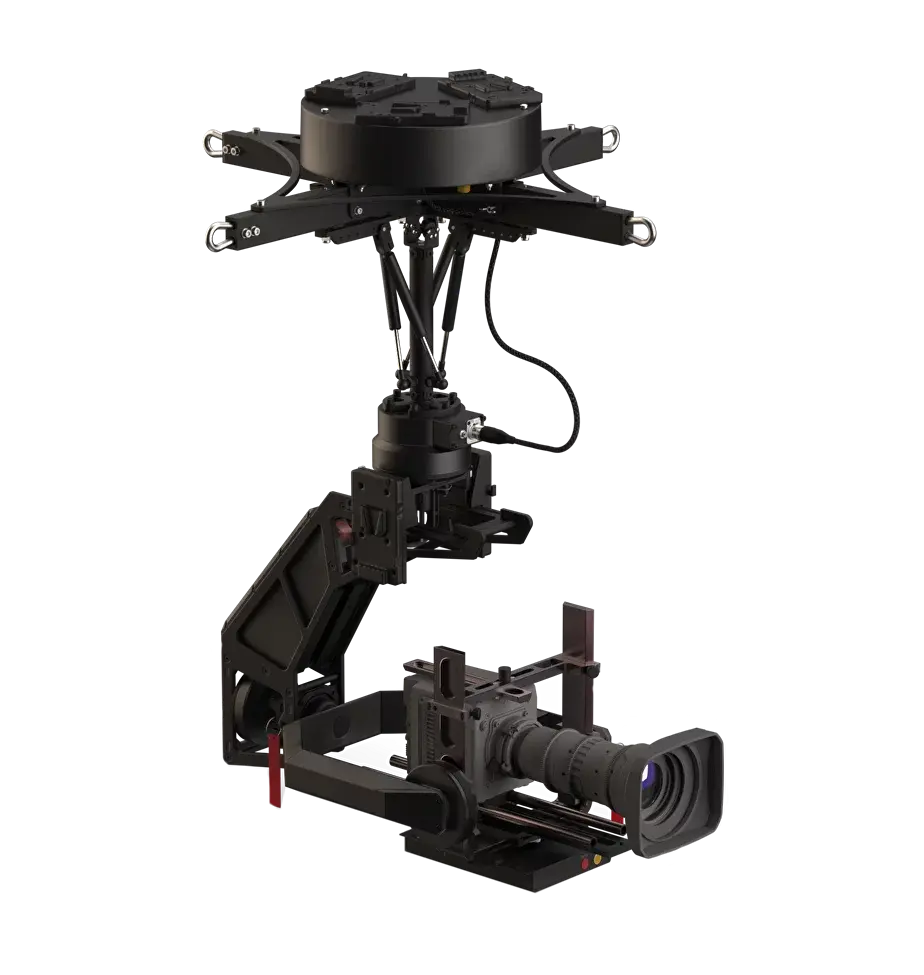
This article compares the JoyMechanix Black Swan gyro-stabilized head with third-party gimbals and stabilized heads for professional camera motion systems.
The scope is not limited to cable cam systems. Black Swan can be used with JoyMechanix cable cam systems, Re:Crane, third-party cranes, third-party cable cam systems, dollies, rails, and other compatible motion platforms.
The article is written for broadcasters, rental companies, venues, worship facilities, production teams, integrators, and technical buyers who need to decide whether to use an existing head, choose a third-party option, or build the system around Black Swan.
It focuses on integration, camera and lens control, signal path, video transmission, AR and tracking, motion control, setup complexity, and upgrade planning.
The scope is not limited to cable cam systems. Black Swan can be used with JoyMechanix cable cam systems, Re:Crane, third-party cranes, third-party cable cam systems, dollies, rails, and other compatible motion platforms.
The article is written for broadcasters, rental companies, venues, worship facilities, production teams, integrators, and technical buyers who need to decide whether to use an existing head, choose a third-party option, or build the system around Black Swan.
It focuses on integration, camera and lens control, signal path, video transmission, AR and tracking, motion control, setup complexity, and upgrade planning.
3 stabilized head options
When configuring a professional camera motion system, buyers usually have three options.
Using an existing head can reduce the initial investment if the equipment is already available and technically compatible. Buying a third-party head may also make sense if the production has a preferred camera package or a specific workflow.
Choosing Black Swan is usually the best option when the buyer wants the most integrated JoyMechanix workflow. This can include stabilized camera movement, lens control, camera control, video signal, AR tracking data, and coordinated motion control inside one planned system architecture.
The main question is not only “Which head can carry the camera?” The better question is “Which head gives the production the right level of integration?”
- Use an existing gimbal or stabilized head
- Buy a third-party gimbal or stabilized head
- Choose the JoyMechanix Black Swan gyro-stabilized head
Using an existing head can reduce the initial investment if the equipment is already available and technically compatible. Buying a third-party head may also make sense if the production has a preferred camera package or a specific workflow.
Choosing Black Swan is usually the best option when the buyer wants the most integrated JoyMechanix workflow. This can include stabilized camera movement, lens control, camera control, video signal, AR tracking data, and coordinated motion control inside one planned system architecture.
The main question is not only “Which head can carry the camera?” The better question is “Which head gives the production the right level of integration?”
Why Black Swan provides the most integrated workflow
Black Swan is designed as part of the JoyMechanix camera motion ecosystem.
This is the main difference compared with using a separate third-party gimbal. A third-party head can physically work with a motion system if payload, mounting, balance, power, control, signal, and safety requirements are solved. However, the workflow is often more fragmented.
The production may need separate devices for video transmission, lens control, camera control, AR tracking, or motion synchronization. Each additional device adds setup time, integration work, cable management, troubleshooting, and potential points of failure.
Black Swan is designed to reduce that complexity.
With Black Swan, the stabilized head, motion system, control software, video path, camera control, and lens workflow can be planned as one coordinated environment. This is useful not only on JoyMechanix cable cam systems, but also on cranes, inverted jibs, rails, dollies, and compatible third-party motion platforms.
Black Swan may not be the lightest stabilized head in every comparison, but its weight is part of a professional integrated design. JoyMechanix motion systems are configured with the required payload in mind, so the question is not only head weight. The more important question is whether the head enables the required production workflow.
This is the main difference compared with using a separate third-party gimbal. A third-party head can physically work with a motion system if payload, mounting, balance, power, control, signal, and safety requirements are solved. However, the workflow is often more fragmented.
The production may need separate devices for video transmission, lens control, camera control, AR tracking, or motion synchronization. Each additional device adds setup time, integration work, cable management, troubleshooting, and potential points of failure.
Black Swan is designed to reduce that complexity.
With Black Swan, the stabilized head, motion system, control software, video path, camera control, and lens workflow can be planned as one coordinated environment. This is useful not only on JoyMechanix cable cam systems, but also on cranes, inverted jibs, rails, dollies, and compatible third-party motion platforms.
Black Swan may not be the lightest stabilized head in every comparison, but its weight is part of a professional integrated design. JoyMechanix motion systems are configured with the required payload in mind, so the question is not only head weight. The more important question is whether the head enables the required production workflow.
Camera and lens compatibility
Camera and lens compatibility should be checked early in any stabilized head decision.
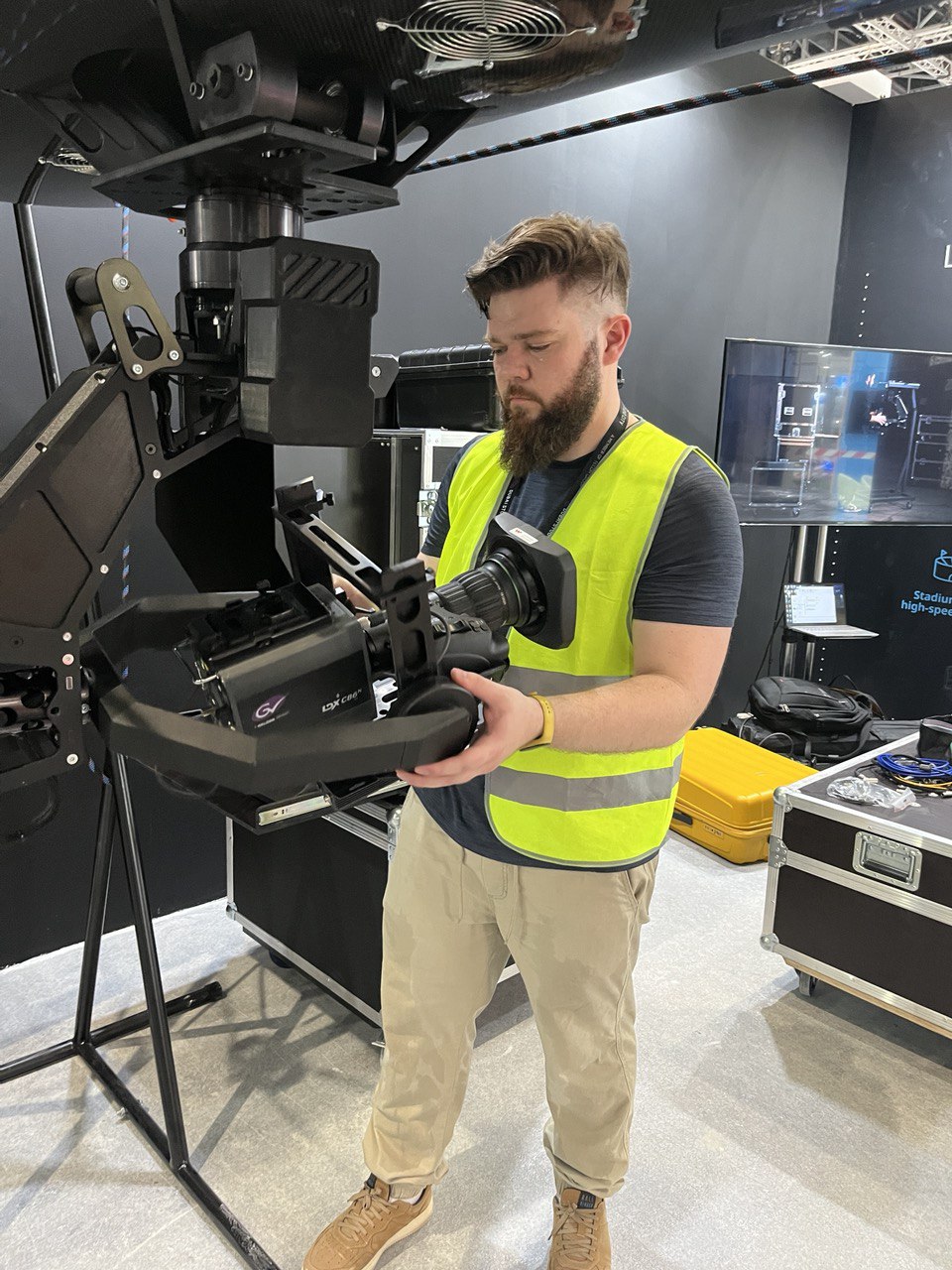
Black Swan is designed for professional broadcast and production workflows. It supports a wide range of camera packages when payload, balance, mounting, power, and signal requirements are confirmed.
For live production, the preferred setup is usually a broadcast camera with a professional servo lens. This is because live workflows often need remote control of zoom, focus, iris, shading, video signal, and sometimes return or monitoring.
Black Swan supports Focus-Iris-Zoom control for compatible motorized Canon and Fujinon lenses. This is important for broadcast, worship, sports, studio, and live event productions where lens control must be reliable and available from the operating position.
Black Swan also provides 360-degree infinite pan rotation. This is a major advantage for camera motion systems because the head can keep framing through complex moves without being limited by a hard pan stop.
A third-party gimbal may still be a good solution, but the lens control path must be checked carefully. If native lens control is not available, external motors, additional control boxes, or custom integration may be required. That can increase cost, setup time, and technical complexity.
Black Swan is designed for professional broadcast and production workflows. It supports a wide range of camera packages when payload, balance, mounting, power, and signal requirements are confirmed.
For live production, the preferred setup is usually a broadcast camera with a professional servo lens. This is because live workflows often need remote control of zoom, focus, iris, shading, video signal, and sometimes return or monitoring.
Black Swan supports Focus-Iris-Zoom control for compatible motorized Canon and Fujinon lenses. This is important for broadcast, worship, sports, studio, and live event productions where lens control must be reliable and available from the operating position.
Black Swan also provides 360-degree infinite pan rotation. This is a major advantage for camera motion systems because the head can keep framing through complex moves without being limited by a hard pan stop.
A third-party gimbal may still be a good solution, but the lens control path must be checked carefully. If native lens control is not available, external motors, additional control boxes, or custom integration may be required. That can increase cost, setup time, and technical complexity.
Signal, video, and control pipeline
One of the strongest reasons to choose Black Swan is the integrated signal and control pipeline.
With Black Swan, video, head control, lens control, and system communication can be planned as one integrated architecture. This is especially important when the production needs a clean professional broadcast signal path or a fiber-based workflow.
Depending on the final configuration, the workflow can include:
With a third-party gimbal, the same result may be possible, but it often requires additional equipment. The production may need separate video transmitters, converters, control interfaces, lens control modules, external tracking sensors, or custom fiber integration.
This does not make third-party gimbals unusable. It means the buyer should evaluate the full technical chain, not only the price of the gimbal.
A lower-cost third-party head can become less cost-effective if it requires extra accessories, custom integration, additional operators, or more setup time to achieve the same workflow.
With Black Swan, video, head control, lens control, and system communication can be planned as one integrated architecture. This is especially important when the production needs a clean professional broadcast signal path or a fiber-based workflow.
Depending on the final configuration, the workflow can include:
- HD or 4K video transmission
- 3G-SDI or 12G-SDI signal paths
- Fiber-based signal transmission
- Ethernet control
- RS232 or related control communication
- Lens control for compatible Canon and Fujinon lenses
- Camera control integration
- Coordinated head and motion system operation
- AR or tracking output where required
With a third-party gimbal, the same result may be possible, but it often requires additional equipment. The production may need separate video transmitters, converters, control interfaces, lens control modules, external tracking sensors, or custom fiber integration.
This does not make third-party gimbals unusable. It means the buyer should evaluate the full technical chain, not only the price of the gimbal.
A lower-cost third-party head can become less cost-effective if it requires extra accessories, custom integration, additional operators, or more setup time to achieve the same workflow.
AR and tracking integration
AR and tracking are important factors when choosing a stabilized head.
If augmented reality, virtual production, broadcast graphics, studio automation, or real-time camera tracking is required, the motion system must provide accurate position and orientation data. The production system needs to understand where the camera is, where it is pointing, and how lens values affect the image.
Black Swan is designed for native AR and tracking integration within the JoyMechanix workflow. This can reduce the need for external sensors and separate calibration chains.
Some third-party stabilized heads can also be integrated if they provide the required data and signals. In those cases, their signals can be brought into the system pipeline, but this must be confirmed case by case.
Many third-party gimbals may require external sensors or additional integration to generate usable AR and tracking data. This can increase both cost and complexity. It can also make calibration, support, and troubleshooting more difficult because the tracking workflow is no longer fully native to the motion system.
If AR is part of the project, stabilized head selection should happen early. It affects tracking origin, offsets, lens calibration, signal flow, software integration, and the overall control architecture.
If augmented reality, virtual production, broadcast graphics, studio automation, or real-time camera tracking is required, the motion system must provide accurate position and orientation data. The production system needs to understand where the camera is, where it is pointing, and how lens values affect the image.
Black Swan is designed for native AR and tracking integration within the JoyMechanix workflow. This can reduce the need for external sensors and separate calibration chains.
Some third-party stabilized heads can also be integrated if they provide the required data and signals. In those cases, their signals can be brought into the system pipeline, but this must be confirmed case by case.
Many third-party gimbals may require external sensors or additional integration to generate usable AR and tracking data. This can increase both cost and complexity. It can also make calibration, support, and troubleshooting more difficult because the tracking workflow is no longer fully native to the motion system.
If AR is part of the project, stabilized head selection should happen early. It affects tracking origin, offsets, lens calibration, signal flow, software integration, and the overall control architecture.
Motion control and programmed movement
Motion control is often the deciding factor.
A professional camera motion system can do more than manual movement. In advanced workflows, the system can record paths, repeat moves, use programmed trajectories, change any piece of trajectory live at any time, and coordinate movement between the motion platform and the stabilized head.
This is where Black Swan has a clear advantage.
With Black Swan, the movement of the motion system and the movement of the stabilized head can be synchronized inside the JoyMechanix workflow. This supports coordinated full motion control, repeatable paths, and more precise camera behavior during complex productions.
This is useful for:
With third-party gimbals, local motion recording may be possible inside the gimbal’s own system. However, synchronizing that movement with the external motion system is a different requirement. It usually needs API work, custom development, or project-specific integration.
This can be done in some cases, but it should be treated as an integration task, not a default feature.
For simple manual operation, a third-party gimbal may be enough. For full native coordinated motion control between the motion system and the stabilized head, Black Swan is the stronger option.
A professional camera motion system can do more than manual movement. In advanced workflows, the system can record paths, repeat moves, use programmed trajectories, change any piece of trajectory live at any time, and coordinate movement between the motion platform and the stabilized head.
This is where Black Swan has a clear advantage.
With Black Swan, the movement of the motion system and the movement of the stabilized head can be synchronized inside the JoyMechanix workflow. This supports coordinated full motion control, repeatable paths, and more precise camera behavior during complex productions.
This is useful for:
- TV Studio automation
- Worship productions
- Broadcast graphics
- AR and virtual production
- Repeated show cues
- Concert and live event sequences
- Motion-controlled crane or inverted jib moves
- Cable cam paths that must coordinate with camera framing
With third-party gimbals, local motion recording may be possible inside the gimbal’s own system. However, synchronizing that movement with the external motion system is a different requirement. It usually needs API work, custom development, or project-specific integration.
This can be done in some cases, but it should be treated as an integration task, not a default feature.
For simple manual operation, a third-party gimbal may be enough. For full native coordinated motion control between the motion system and the stabilized head, Black Swan is the stronger option.
When a third-party gimbal can make sense
A third-party gimbal can still be a reasonable choice in some projects.
It may make sense when:
This can be a good entry path.
For example, a rental company may already own a stabilized head and want to begin using a motion system without buying the full native head package immediately. A studio may want to keep its existing camera workflow for the first phase of installation. A production company may want to validate the use case before investing in full integration.
The important point is to define expectations clearly. A third-party gimbal can work, but it may not unlock all system functions. The buyer should confirm payload, mounting, camera fit, lens control, video path, power requirements, AR needs, and motion synchronization before choosing this route.
It may make sense when:
- The client already owns a compatible head
- The project has a limited starting budget
- The production does not need AR or tracking integration
- The production does not need full coordinated motion control
- The camera package is already built around a specific third-party head
- The workflow is mostly manual
- The project uses a short-term or experimental configuration
- The buyer wants to start with a basic setup and upgrade later
This can be a good entry path.
For example, a rental company may already own a stabilized head and want to begin using a motion system without buying the full native head package immediately. A studio may want to keep its existing camera workflow for the first phase of installation. A production company may want to validate the use case before investing in full integration.
The important point is to define expectations clearly. A third-party gimbal can work, but it may not unlock all system functions. The buyer should confirm payload, mounting, camera fit, lens control, video path, power requirements, AR needs, and motion synchronization before choosing this route.
Upgrade path: start third-party, move to Black Swan later
JoyMechanix motion systems are flexible.
A client can start with an existing head or a third-party gimbal, then upgrade later to Black Swan. This allows the buyer to phase the investment without replacing the core motion system.
This is useful when the client wants to reduce initial capital expenditure or test a new business model before adding the full native stabilized head. It is also useful for rental companies that already own compatible heads and want to keep the first configuration lean.
The upgrade path is important because it separates the platform decision from the head decision. A buyer can choose the right cable cam system, crane, inverted jib, rail system, or other motion platform now, then improve the stabilized head workflow later.
However, if the project already requires professional lens control, clean fiber-based signal handling, AR integration, tracking output, and coordinated motion control from day one, Black Swan should be evaluated as part of the initial configuration.
A client can start with an existing head or a third-party gimbal, then upgrade later to Black Swan. This allows the buyer to phase the investment without replacing the core motion system.
This is useful when the client wants to reduce initial capital expenditure or test a new business model before adding the full native stabilized head. It is also useful for rental companies that already own compatible heads and want to keep the first configuration lean.
The upgrade path is important because it separates the platform decision from the head decision. A buyer can choose the right cable cam system, crane, inverted jib, rail system, or other motion platform now, then improve the stabilized head workflow later.
However, if the project already requires professional lens control, clean fiber-based signal handling, AR integration, tracking output, and coordinated motion control from day one, Black Swan should be evaluated as part of the initial configuration.
Practical selection framework
Use this framework when choosing between Black Swan and a third-party gimbal.
This includes stabilization, lens control, video, camera control, AR output, and synchronized motion between the head and the motion system.
Native integration reduces the need for external sensors and simplifies calibration, support, and troubleshooting.
Full coordinated motion control is strongest when the head and the motion platform are designed to work together.
If the production only needs manual stabilized shots and does not require AR, lens integration, tracking, or synchronized programmed movement, a compatible third-party head may be enough.
This can reduce the initial investment, as long as compatibility is confirmed before the system is configured.
Starting with a third-party head and upgrading later can be a practical path for owners who want to build capability over time.
- Choose Black Swan if you need the full integrated workflow
This includes stabilization, lens control, video, camera control, AR output, and synchronized motion between the head and the motion system.
- Choose Black Swan if AR or tracking is important
Native integration reduces the need for external sensors and simplifies calibration, support, and troubleshooting.
- Choose Black Swan if the system will use repeatable programmed movement
Full coordinated motion control is strongest when the head and the motion platform are designed to work together.
- Consider a third-party gimbal if the workflow is simple
If the production only needs manual stabilized shots and does not require AR, lens integration, tracking, or synchronized programmed movement, a compatible third-party head may be enough.
- Consider using your existing head if budget is the main constraint
This can reduce the initial investment, as long as compatibility is confirmed before the system is configured.
- Plan for Black Swan later if you want a phased investment
Starting with a third-party head and upgrading later can be a practical path for owners who want to build capability over time.
Key takeaways
- Black Swan is a gyro-stabilized head for camera motion systems, not only for cable cam systems.
- It can be used with JoyMechanix cable cam systems, Re:Crane, third-party cranes, third-party cable cam systems, dollies, rails, and compatible motion platforms.
- Third-party gimbals can work in some configurations, but they may require extra equipment for video, lens control, AR tracking, or motion synchronization.
- Black Swan supports 360-degree infinite pan rotation and professional lens control workflows.
- Native AR and tracking integration are cleaner with Black Swan than with any third-party options.
- Full native coordinated motion control between the motion system and stabilized head is the strongest reason to choose Black Swan.
- Clients can start with an existing or third-party head and upgrade to Black Swan later.
FAQ
Is Black Swan only for JoyMechanix cable cam systems?
No. Black Swan is not only for cable cam systems. It is a gyro-stabilized head for multiple camera motion platforms, including JoyMechanix cable cam systems, Re:Crane, third-party cranes, third-party cable cam systems, dollies, rails, and other compatible systems.
Can I use my own gimbal with a JoyMechanix motion system?
Yes, in many cases you can use your own gimbal or stabilized head if it is technically compatible. By default, your gimbal should have a Mitchell mount. Payload, mounting, balance, power, video, lens control, signal path, AR requirements, and motion control expectations must be checked first.
Is Black Swan required for a JoyMechanix cable cam system?
No. Black Swan is not always required. A third-party gimbal can be used in some configurations. However, Black Swan provides the most complete native integration and unlocks the full JoyMechanix workflow.
What is the main advantage of Black Swan?
The main advantage is integration. Black Swan can combine stabilization, lens control, camera control, video transmission, AR compatibility, tracking data, and coordinated motion control inside one planned motion environment.
Does Black Swan support 360-degree pan rotation?
Yes. Black Swan supports 360-degree infinite pan rotation, which is important for cable cam systems, cranes, live events, studios, worship productions, and broadcast applications.
Can third-party gimbals support AR with JoyMechanix camera motion control systems?
Some third-party heads can support AR workflows if they provide the required data and signals. Many other third-party gimbals may require external sensors or additional integration, which can increase cost and complexity.
Why is motion control different with Black Swan?
With Black Swan, the motion platform and stabilized head can be synchronized inside the JoyMechanix workflow. With third-party gimbals, synchronized motion control usually requires API integration, custom development, or project-specific engineering.
Is a third-party gimbal cheaper?
The initial cost may be lower, especially if the client already owns it. However, the total cost can increase if additional transmitters, converters, lens control equipment, AR sensors, or custom integration are required.
Can I upgrade from a third-party gimbal to Black Swan later?
Yes. A client can start with an existing or third-party head and upgrade later to Black Swan. This allows a phased investment without replacing the core motion system.
Conclusion
The choice between Black Swan and a third-party gimbal depends on how much integration the production needs.
A third-party gimbal can be a good starting point when the client already owns compatible equipment, has a limited starting budget, or does not need advanced AR, tracking, lens control, or synchronized motion control. It can reduce the initial investment and keep the first configuration simple.
Black Swan is the stronger choice when the client wants a complete professional workflow. It brings the stabilized head, motion system, video path, lens control, camera control, AR data, tracking, and programmed movement into one integrated environment.
For buyers planning long-term use, rental work, broadcast production, worship, studio automation, crane operation, cable cam operation, or advanced repeatable shots, Black Swan usually provides the cleaner and more capable configuration.
The best approach is to define the camera package, lens requirements, signal path, AR needs, tracking workflow, and motion control expectations before choosing the stabilized head.
A third-party gimbal can be a good starting point when the client already owns compatible equipment, has a limited starting budget, or does not need advanced AR, tracking, lens control, or synchronized motion control. It can reduce the initial investment and keep the first configuration simple.
Black Swan is the stronger choice when the client wants a complete professional workflow. It brings the stabilized head, motion system, video path, lens control, camera control, AR data, tracking, and programmed movement into one integrated environment.
For buyers planning long-term use, rental work, broadcast production, worship, studio automation, crane operation, cable cam operation, or advanced repeatable shots, Black Swan usually provides the cleaner and more capable configuration.
The best approach is to define the camera package, lens requirements, signal path, AR needs, tracking workflow, and motion control expectations before choosing the stabilized head.